Health / Wellness, Mental health, Mindset, Self-care, Stress / Anxiety

Meaning Making Machines: Do You Filter The Stories Your Brain Tells You?

Do you notice that your brain comes up with stories?

You’re having lunch with a friend and theres a couple at another table getting into a heated conversation. You can’t actually hear what they are saying but… their faces and body language says it all.

Your mind automatically fills in the blanks.

It begins coming up with stories about what the couple could be arguing about.

“Maybe she caught him checking out the waitress…”

“Or maybe she spent a little too much of their money on those heels..”

No matter how ridiculous or unlikely the story we come up with is, our minds are willing to create it.

Our Brains Are Meaning Making Machines!

Our brains are designed to close loops. It fills in the gaps of missing information as if it is fact.

They label a story as either positive or negative.

But, do you notice….

Our brains lean towards labelling the negative, more catastrophic side of things?

Our Brains Are Designed to Help Us Survive, NOT Thrive…

The brains key function is to keep us safe and out of danger.

This kept us safe when days were simpler….

“Oh snap, that lion is approaching me with hunger in his eyes, I must escape…”

These days, it has definite downsides….

Debilitating, even.

I watched a video recently by Alex Hormozi who perfectly explains the downsides of labelling situations as positive or negative – especially when it comes to our Mental Health…

We See Experiences As Two Opposing Sides of a Spectrum

We label moments in time as either:

  • Good or Bad
  • Happy or Sad
  • Relaxed or Stressed

The problem is, when an experience isn’t ideal, our brains label it as a “negative experience.”

It kicks into survival mode. It tells us that this negative experience is “bad or wrong.”

It wants us to escape it – often by taking medication, or finishing off that 6-pack in the fridge…

The thing is….

These “negative experiences” aren’t bad at all….

They’re What Makes Us Human!

It is okay – in fact – normal to experience both highs and lows.

It’s part of the human experience.

It is a blessing to feel so many emotions – We need not condemn ourselves when we are feeling low.

So, Is Being Human The Problem?

Not at all!

Feeling a range of emotions – ups and downs – is human nature.

Just like it’s our brains nature to help us survive – even if that means telling us irrational explanations to an experience.

It’s up to us to decipher if the labelling going on in our brains is rational or not.

(Hint: most times… its not)

Man’s Search For Meaning

Alex Hormozi ended off his video by sharing a little piece of advice from this book by Viktor E. Frankl…

Viktor E. Frankl – for those who do not know – was a Holocaust survivor. He survived the Auschwitz Concentration Camps in Nazi Germany. His family did not…

In his book, he shares his experiences as a prisoner and the revelation he received about life and suffering.

Viktor’s message is simply this:

“Between our circumstances and our responses, there is always CHOICE.
Suffering is OPTIONAL.”

This is coming from a man who has been through the worst of the worst.

Even he can find meaning in suffering.

The key is not eliminating emotional distress or negative experiences, but accepting it as a part of being human.

And being able to find meaning in the madness.

With love,

Miss T.


If You’re Interested In The Alex Hormozi Video I Was Referring To In This Post,

You Can Check Out The Video Below!
Health / Wellness, Mental health, Mindfulness, Mindset, Stress / Anxiety

How To Protect Yourself From The World’s DEADLIEST Disease: Fear

Fear – What is its purpose?

Experiencing fear is part of being human. It was built into our operating system to keep us safe.

When our lives are threatened, our stress response triggers us into ‘fight or flight’ mode to quickly expel the danger from our presence.

These short-bursts of fear are essential for our survival.

But, What Happens When our Fear is Constant?

While short bursts of fear are meant to keep us safe, living in fear does the opposite…

When our sympathetic nervous system (‘fight or flight’) is triggered for long periods of time, we feel its detrimental affects.

Our bodies are not meant to sustain this mode for long.

Our bodies CANNOT sustain this mode for long.

So, what actually happens to us as a result?

Fear Reduces Our Body’s Ability To Function

In ‘fight or flight’ mode, our body suspends energy that is needed for other parts of the body. It directs all energy towards the perceived threat.

When the threat disappears, our body returns to normal, sharing the energy among the body’s systems.

But when the threat does not disappear…

When we are always fearful of something….

Our stress response hoards that energy.

It leaves nothing for the rest of the body to function properly.

Our Immune System Takes a Hit.

Our immune system doesn’t receive any energy to produce the cells it needs to keep our bodies safe.

Our ability to fight off diseases and infection is reduced significantly!

We become prone to illness.

The Whole World is Living in Fear…

And while there is lots to be afraid of, accepting a life of stress is not serving anyone. It does not serve YOU!

People are afraid because they want to stay safe.

But fear is what is preventing safety…

So… What Can We Do to Keep Our Fears at Bay?

Here are a few tips to get you started!

Tip #1: Turn off the News!
Although the news is supposed to keep us “informed,” it also sends constant messages of worry and fear into our brains. The news turns fear into a part of our subconscious.

I promise, it will not kill you to turn off the news every now and then… in face, it might SAVE you!

Tip #2: Social Media Detox!
I get it, social media is another way we stay “informed,” but constant scrolling on social media is another way of penetrating more fearful news into our brain and subconscious.

It also promotes comparison. We compare ourselves to others. We get depressed over all that we lack. But, we see only the “best” of peoples lives on social media – not necessarily their REAL life…

Tip #3: Get Outside in Nature!
Reconnect with the real world! Being in nature, we get out of our own heads and away from our fears. Nature takes us to the present moment.

Nature also triggers the parasympathetic response, which is the opposite as our stress response! This allows our body and minds to rest, relax, and restore energy.

Ahhh! Just what we need!

Living in Fear is Not Keeping Anyone Safe.

Get out of your head and into the present moment

Let the present moment lead you to wellness

With love,

Miss T.

Health / Wellness, Mental health, Mindfulness, Self-care

You Or Your Breath… Who Control’s Who?

Did you notice your breathing today?

Chances are, you’ve been breathing unconsciously your whole life. Without ever thinking about it.

And why should you have to start breathing consciously now?

Your Reptilian Brain, which Controls your Instincts, Automatically Signals your Body to Breathe.

You don’t ever have to think about it.

Or do you…?

You might not… but you should!

Why?

Even though our Reptilian Brain does a good job of keeping us alive, all the stress in the world makes for shorter and shallower breaths.

The Reptilian Brain is keeping us alive by keeping us breathing… but that doesn’t mean it keeps us breathing well…

Not in the long term, at least…

Stress is Everywhere These Days…

With all of this added stress, our breathing has changed.

We no longer fill up the entirety of our lungs when we inhale…

And we don’t fully empty out our lungs on the exhale…

We miss the opportunity to get the most amount of oxygen delivered to our bloodstream. And to the rest of our bodies.

Without the proper amount of oxygen delivered to the body, it lacks the ability to function optimally.

Lack of oxygen contributes to:

  • Ramped up Nervous System – more stress.
  • Reduced Immune Functioning – more sickness.
  • Decreased Functioning in the Heart, Brain, and other Organs – a whole lot more stress and sickness.

Our Body Systems are Connected.

Connected by our breath.

We need to stop taking our breath for granted.

Our breath is our life force.

It isn’t something we can afford to forget about.

The key to health: Remember to notice your breathing.

And then breathe like your life depends on it.

Because…

… It does.

With love,

Miss T.

Compassion, Health / Wellness, Mental health, Mindfulness, Mindset, Self-care, Stress / Anxiety

Teens Have It Rough: Help Your Teenager Navigate Tough Waters With This All-In-One Gratitude Journal!

Teenagers Sure do Have it Rough…

For them, life is a balancing act.

  • Balancing stress from all the social pressures…
  • Struggling with confidence and self-acceptance…
  • Questioning their place in this world…

They have to deal with all this (and more) with an under-developed brain.

Their brains are STILL a work in progress…

I look at that list (even with my developed adult brain) and know I’d be struggling balancing all of that too…

So What Can We Do?

How can we help them navigate through this tricky spot in life?

I asked myself these very same questions at the beginning of this school year…

Because this School Year, I Found Myself Neck-Deep in the Middle of Grade 9 Classroom Waters…

This classroom was filled with some complex kids with complex needs…

I wanted to help them…

The way I wish someone helped me back then…

They desperately needed certain skills…

Skills that would help them THRIVE, instead of just SURVIVE…

This is why, after much thought and a lot of field research (testing the waters of my Grade 9 classroom), I came up with a way to help my students build an essential skillset!

A skillset that would help them, not only, navigate the rough waters of Junior High, but also prepare them for life (and develop their brains along the way)!

Introducing…
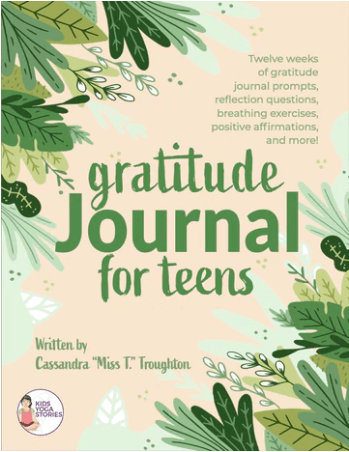
The Kids Yoga Stories Gratitude Journal for Teens!!

Okay, but what makes this Gratitude Journal so special?

How is a gratitude journal supposed to help our struggling Teens…?

Well, THIS journal is MORE than just any old Gratitude Journal…

In fact, it helps Teens develop qualities and skills like:

  • Emotional Regulation and Stress Management
  • Confidence and Self-Esteem
  • Empathy and Compassion for Themselves and Others
  • Positive Self-Talk and and Self-Acceptance
  • Forgiveness and Perspective Shifting
  • And of course, Expressing Gratitude and Feelings of Appreciation

How Does One Journal Do All of This?

It provides regulation strategies, like Breath of the Month and Mindful Colouring, to manage stress and anxiety – tools that Teens can use for life!

(I don’t care who you are, you can’t tell me Teens are “too cool for school” to colour… My field research says otherwise! :P)

The Weekly Positive Affirmations promote positive self-talk, self-acceptance, boosts confidence and reminds Teens to show themselves compassion. We are all just human, after all.

The Gratitude Questions and Challenges are thought provoking and help shift perspective in Teens. They begin to understand their place in the world and have appreciation for whats going on around them.

This Interactive Journal provides a creative outlet for Teens to get thoughts and worries out of their heads. Getting things out on paper gives Teens the chance to reflect on experiences and even learn from them.

Plus, we already know that when our Mental Health improves, so does our overall health! This translates to other parts of our lives.

And Teens will benefit for years to come!

But Why?

Why Did I Decide To Create A Journal For Teens Unlike Any Other?

Well, I’d like to ask you this…

Do YOU remember what it was like being a Teenager?

I sure do…

And when I met my Grade 9 students on that very first day, I saw myself in all of them.

All of my insecurities…

All of my worries…

All of my struggles trying to fit into the world…

I Barely Got By My Teen Years

I wasn’t about to let that happen to these kids.

So…

I asked myself,

“How would I have helped MYSELF back in my Teen years?”

“What supports did I desperately need?”

DIY: Gratitude Notebooks

A few students and I put together personal notebooks filled with gratitude, breathing and calming strategies, affirmations, and other random thoughts!

The note books were amazing, but they just weren’t quite enough

They weren’t as organized as I would have liked.

They weren’t as appealing to the Teenager who is concerned about appearance.

So….

I took all of these lessons I learned from my Gratitude Notebooks,

All of the lessons from my Teenage students,

And all of the lessons from reflecting on my Teen years,

And turned them into the beautiful…

Kids Yoga Stories Gratitude Journal for Teens!

“It takes courage to grow up and become who you really are…”

The Kids Yoga Stories Gratitude Journal for Teens helps teens develop the courage to be who they really are.

So they can be who they are really meant to be…

With Love & Gratitude,

Miss T.


If You are Interested in Helping Your Teen Navigate Tough Waters…

Check out the Kids Yoga Stories Gratitude Journal for Teens!

Twelve weeks of Gratitude Journal Prompts, Reflection Questions, Breathing Exercises, Positive Affirmations, and more!

This Journal Also Includes:

  • A NEW Gratitude Question EVERY DAY
  • Weekly Mandala Colouring Pages (That Double as Positive Affirmations)
  • Inspirational Quotes for Each Day of Prompts

Here Are What Some Teens Had To Say About The
Kids Yoga Stories Gratitude Journal:

“I would buy 8 copies of this journal if I could…”

-Grade 9 Student

“Can you let me know when this journal comes out so I can get my parents to buy it?”

-Grade 7 Student
Education, Health / Wellness, Kids, Mental health, Mindfulness, Stress / Anxiety

Education Problems 101: How To Practice Mindfulness When You Just Don’t Have The Space

I get it…

Space is limited!

We don’t all have cozy corners, or carpet spaces in our classrooms… Some of us don’t even have classrooms!

This was my challenge too…

As an Educational Assistant, I didn’t have my own classroom. No place to practice Mindfulness with my students. No place to put my Mindfulness “tools”.

But, I Had A Dream…

I wanted to teach students Mindfulness techniques and get my message out to the school.

I felt it was too important of a dream to just forget about because I was lacking one crucial aspect…

So, how did I overcome this challenge?

How did I bring Mindfulness to my students WITHOUT the space to do so?

I Got Creative…

Accepting that there was a challenge was Step #1!

CHOOSING to find an alternative and face it head on was Step #2!

We don’t often get past Step #1 – Our subconscious holds onto the message that there isn’t always a way around a problem.

BUT…

There is ALWAYS another way! There is ALWAYS an alternative!

All you have to do is a little creative thinking…

For me, this meant introducing…

The Mindfulness Bin!

The Mindfulness Bin was a lightweight bin that held all my Mindfulness tools.

Because I couldn’t hold Mindfulness in one classroom, this bin needed to go ANYWHERE I needed to go.

Sometimes Mindfulness Club took place in the music room, or outdoors. Sometimes it was help in the gym, or in a spare classroom.

Students LOVED to be “Mindfulness Bin Leaders” – They took such pride in hauling our little bin around.

The Mindfulness Tools that you’d be likely to find in my Mindfulness Bin were:

  • Sit Spots
  • Breathing Activities Book
    (Breathe Like a Bear by Kira Willey)
  • Mandala Colouring Pages
  • Pencil Crayons
  • Breathing Stars
  • Talking Stick
  • Sand Timer
  • Activity Cards (Breath Work/Yoga Cards)
  • Self Check-In Cards & Erasable Markers

Maybe that sounds like a lot to you… But all these items were small and easy to carry.

I’d sometimes switch them out for a little variety.

I NEVER Felt Limited with The Mindfulness Bin!

Although it was small, it sure was mighty!

It had all the tools we needed to get the job done.

My students saw the bin as this magical component to Mindfulness Club…

Remember Mary Poppins?

And the never-ending magical tote bag she would pull unlimited items out of?

Yeah…?

Well, that’s how I felt every time I had The Mindfulness Bin with me!

“What will Miss T. pull out next?!”

No Space, No Problem!

Don’t get discouraged if you have a space-limiting challenge in front of you.

Get creative: Think outside-of-the-box!

There is always a way. Always a solution.

I hope my Mindfulness Bin story will inspire you to take creative action on your next big challenge.

I know you can do it…

With love,

Miss T.

Health / Wellness, Mental health, Stress / Anxiety

The #1 Secret to Living a Healthy, Full Life!

What is The Secret to Living a Healthy Life?

Growing up, I was told if you stay active and eat nutritious foods then you’ll have no problem living to 100!!

I’m sure you’ve heard something along these lines too.

Nutrition and physically activity are the keys to a healthy life…

We hear a lot about the impact our diet and movement can have on our well-being, but we often neglect one of the most important components to our wellness…

Let’s chat about Mental Health!

Where does it fit in this wellness puzzle?

Mental well-being is a tough topic to talk about. Mostly due to lack of awareness.

But now, our world has become filled with anxiety, depression, phobias and a plethora of other mental illnesses.

With mental illness on the rise, we have no choice but to shine a spotlight on Mental Health.

We have to acknowledge it.

And I’m sure glad we are, because it is the real ‘kicker’ when it comes to maintaining our health and wellbeing.

Dr. Gabor Mate, physician and author who specializes in childhood development and trauma, reported about a study of smokers in one of his books.

The smokers were separated into 2 groups:

  • Smokers who were more emotionally stable
  • Smokers who were emotionally repressed and had significant stress

… And the findings were shocking!

Although we KNOW the impact smoking has on our health, there were significant differences between the health of the two groups.

The emotionally stable smokers lived longer, healthier lives- not necessarily guaranteeing lung cancer and other diseases.

The emotionally repressed smokers were 5x more likely to develop these diseases!

Smoking alone does not cause lung cancer…

Smoking + Poor Mental Health does!

Woahhh…

This doesn’t mean I’m telling you to take up smoking..

I’m telling you this to remind you how powerful our mindset can be. Our thoughts and emotions have the power to override unhealthy habits – like smoking!

This is why it is so important not to disregard our good ol’ friend ‘Mental Health’ when it comes to our well-being.

Our thoughts can make us sick, but they can also make us well.

Adding in positive mental health practices to our lives is just as essential (if not, more essential) for our overall wellness than physical activity and nutrition alone!

Mental Health is the missing piece to our wellness puzzle.

Now that you know…

…How will you chose to use your thoughts?

… For health? Or for illness?

No one can make the choice but you!

With love,

Miss T.

Health / Wellness, Kids, Mental health, Technology

A Must-Read For Parents: 3 Jaw-Dropping Lessons on Brain Development From a 7 Year Old!

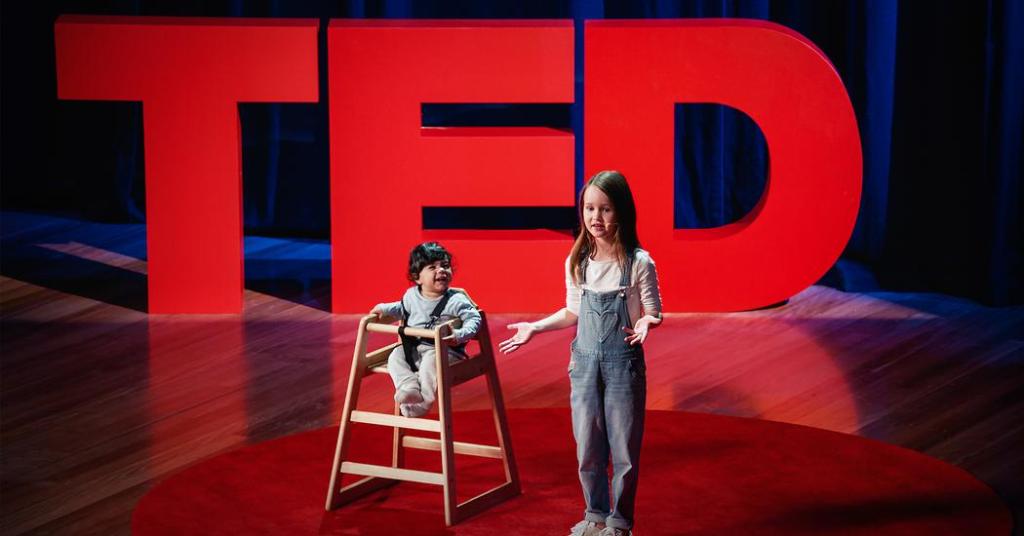
The most powerful TED talk I’ve watched, was given by a 7 year old…

Molly Wright makes her way across the TED stage and begins…

“What if I told you a game of peekaboo could change the world…?”

Molly Wright

Molly is not your typical 7 year old.

She is a prime example of what happens when a child’s brain development is nurtured through the early years.

Not only is she a prime example, she’s also an advocate for healthy childhood development.

I learned more from this 7 year old in 7 minutes, than I did reading over 100 books (written by adults) about children and their brains.

When kids are exposed to things like…

  • Connecting
  • Talking
  • Playing
  • A Healthy Home
  • A Sense of Community

… it contributes positively to their development.

Connecting with our family and community builds and strengthens relationships, encourages trust, promotes positive mental health, and teaches life skills.

I’m sure we can wait until kids are older to start teaching them these skills though, right?

WRONG!

So… When should we be connecting, playing and talking to our kids?

#1. First 5 Years!

Molly reminds us that these years of a child’s life are the most CRUCIAL years in their development.

Brains grow faster in the first 5 years than they do the rest of our lives. By the time kids are 7 years old, their brains have grown to 90% the size of an adults’ brain.

Do not underestimate those first 5 years…

So… What should we be doing those first 5 years?

#2. Serve and Return!

This is Molly’s scientific way of saying… CONNECT! TALK! PLAY!

Children’s mirror neurons are on alert! They learn through connecting and interacting with the adults they trust. Making eye contact and playing games with your child (yes, like peekaboo), are important for their development and for their learning!

So… How often should we be playing games like peekaboo?

#3. Early and Often!

Molly reinforces that we need to be playing these games and connecting with our child as often as we can, and as early as we can!!

Even a 1 year old is aware of the broken connection when our attention is diverted.

Diverted to technology… To our devices…

What would happen if we were distracted by our devices all the time?

When children are not receiving the positive interactions they need for healthy brain development, childhood becomes stressful – even traumatic.

It is harder for children to feel safe, to trust, and to regulate without connection…

Kids NEED positive relationships.

They need connection, to be spoken to, and played with.

They need a healthy and safe home.

To feel a part of a community.

And YOU have the opportunity to give them that.

So, thanks, Molly Wright (the smartest 7 year old I know), for reminding us that a game of peekaboo has the capacity to change the world…


Everyone!

Go do yourselves a favour and watch Molly speak right here!


Hope you enjoyed it as much as I did!

With love,

Miss T.


Health / Wellness, Mental health, Mindfulness, Self-care, Stress / Anxiety

What Is The Heart-Brain Connection? And Why Do We Need It To Unlock Optimal Health?

We understand the importance of the brain.

Especially when it comes to our mental health, stress, and of course our intelligence.

But, we seem to be forgetting something about our friend, the brain…

He doesn’t work alone…

He is part of an essential team!

Introducing Team: Heart-Brain Connection!

Our heart and brain are in constant communication with one another.

They communicate in 4 different ways:

  • Neurologically
  • Biochemically
  • Biophysically
  • Energetically

The heart and brain need open communication to function optimally, just like any good relationship.

When they are communicating openly, it creates something called ‘Coherence’ in the body.

A Coherent state not only improves our mental wellness, but also improves our physical health and boosts our immune functioning!

So, HOW Do We Get To Coherence?

First, we need to understand who the real captain of this team is….

This Captain is…. drumroll please….

The HEART!

We need to, first, tap into the heart to effectively access the brain.

In order to synch up this wondrous team.

And then, to become coherent.

Okay, But, Why The Heart?

The heart has a mind of its own with 40,000 neurons!!

It has its own intelligence…. It can think for itself…

It doesn’t need its team member, the brain, to do all the thinking like we might assume. In fact… it does most of the thinking.

Afferent Neural Pathways

One way the Heart and Brain are connected are through these Afferent Neural Pathways.

These pathways lead up from the heart into the brain through ascending pathways, and down from the brain to the hearth through descending pathways.

When looking closely at these pathways, scientist have noticed that 90% of information travels UP from the heart to the brain.

We can see that the heart responds independently to the environment, processes emotions, and regulates its own rhythm without receiving any information from the brain!

Fascinating!!

Electromagnetic Waves

Another form of connection is through electromagnetic waves.

The brain and heart emit their own waves into the space around our bodies. These waves interact with other waves around us – including those waves from our fellow humans.

What scientists have found is that our hearts electromagnetic waves are 5000x bigger than that of our brain!

It is greater in amplitude and greater in strength.

In fact, our heart has the strongest rhythmic field produced by the human body!

And because of this, our brain syncs up and moves to the rhythm of our heart!

What a beautiful dance!!

This Heart and Brain Synchronization is Imperative for Coherence!

Coherence is a necessity.

It is the key to optimal health and well-being.

And our Heart-Brain connection is the key that unlocks coherence.

So please, don’t neglect your heart…

Remember we need to harness the power of both, the Heart AND Brain in order to care for our health through Coherence.

With love,

Miss T.


Education, Health / Wellness, Mental health, Self-care

Burnout Is REAL: Why Self-Care is Essential For Educators

All day long, you give away pieces of your self to others.

To the tiny humans who need your support. Your full-attention. And your love…

But do you ever take a fraction of a second to give back to yourself?

Like a Car.. You Just Can’t Run on Empty..

Listen, I’ve been there.

My students mean the world to me.. There is nothing that I wouldn’t do for them. As long as it means their protection. As long as they are loved.

But along the way, I forgot to stop and love myself…

Even though, I was aware of it, I thought burnout just couldn’t happen to me if everything I did was out of love.

But that wasn’t the case.

I’m human. You’re human too.

And as humans, we need to be filling up our fuel tanks constantly so we can keep on giving to others.

Sometimes, that means we need to give ourselves more than others.

For humble educators: it’s a hard pill to swallow…

But it’s true.

I’ve spent the last few years learning this lesson the hard way.

And if I could go back in time now and have a conversation with the younger version of Miss T,
I would tell her this:

#1. Don’t Bottle Things Up:

It’s easy to stuff our feelings, our exhaustion… And carry on for the sake of our students. But don’t.

Talk to people. To other teachers. Find a community. There is power in knowing you are not alone.

#2. Practice Self-Care:

There are no rules for self-care – it looks different for everyone.

Do things that nourish your soul, recharge your battery and foster sanity. This could mean writing in a gratitude journal, taking a bubble bath, going for a walk… Whatever it is, schedule time for YOU… Everyday!

Begin your morning with something for you, instead of immediately rushing off to take on the world.

#3. Take A Break:

There is strength in knowing when to step back. When to ask for help.

We pride ourselves in never having to call in sick or book a sub. But that’s not sustainable… Take the time you need to recharge.

Book a mental health day each month. Or apply for a short leave if you are in need of some ‘you-time’. Make it a reoccurring thing – like you’d make time to see your mechanic regularity.

There is a Good Chance you Already
Know These Things,
I Did Too…

But please, don’t let yourself hit burnout, like I did, before actually making some changes in your life.

It’s time to put yourself first.

You are human, after all.

Even the tiny humans in your life need you to love yourself.

With love,

Miss T.


Health / Wellness, Mental health, Mindfulness, Mindset, Stress / Anxiety, Uncategorized

How to Live a Happier Life with this Mind-Blowing Mindset Shift

Do you struggle to find happiness in each day?

Are you always thinking:

“I wish life was easier.. I wish I had a better job…. I wish I could be happy…
I wish… I wish… I wish…”

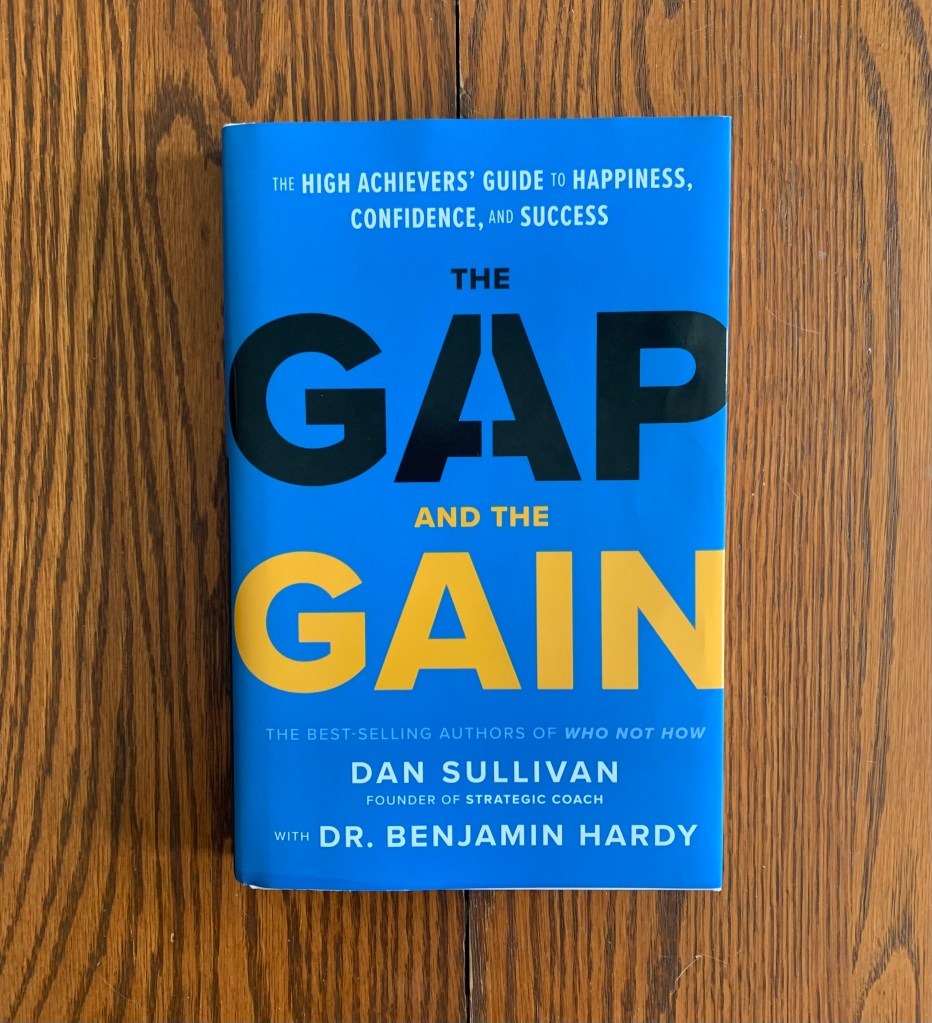
Then you, my friend, are living in ‘The Gap.’

What is this Gap, you ask?

‘The Gap’, described by author Dan Sullivan, is this constant comparison we have of ourselves to our future, our goals, our ideals.

Unfortunately, when we are always comparing ourselves to where we want to be some day, we are spotlighting this gap.. of all we don’t have.

It’s too easy for us to get stuck in this cycle of thinking.

It’s easy because we are natural goal setters.

We work towards goals and strive for success.

And while setting goals is not a bad thing, if we are only measuring ourselves to our future goals, we will only see ‘the Gap.’

This can have detrimental effects on our happiness and well-being.

Here is what we need to do:
Shift our mindset from ‘The Gap’ to ‘The Gain’

‘The Gain’ is the opposite of ‘The Gap’.

Instead of measuring forward, we measure backwards. We can look back in time and measure our current selves to our old selves.

We are able to see how far we’ve already come.

We aren’t measuring ourselves to something external. We are shifting inward.

Now, don’t get discouraged is you find yourself in ‘The Gap’ from time to time…

Awareness of this mindset is key!

Awareness means we have the ability to choose another thought. Another mindset.

Awareness of ‘The Gap’, allows us to shift into ‘The Gain’!

To remind ourselves of our progress. Of how far we’ve already come.

To appreciate the experiences we’ve had and lessons learnt from those experiences.

To start thinking:

“Look how far I’ve come… I am grateful for where I am on this journey…
I’m grateful for all the lessons I’ve learned…. I’m grateful…. I’m grateful…. I’m grateful…”

Only by making this shift to see ‘The Gain’, can we be happy now.

Remember:

“Happiness is where you start, not where you finish…”

With love,

Miss T.