Growing up, I was told if you stay active and eat nutritious foods then you’ll have no problem living to 100!!
I’m sure you’ve heard something along these lines too.
Nutrition and physically activity are the keys to a healthy life…
We hear a lot about the impact our diet and movement can have on our well-being, but we often neglect one of the most important components to our wellness…
Let’s chat about Mental Health!
Where does it fit in this wellness puzzle?
Mental well-being is a tough topic to talk about. Mostly due to lack of awareness.
But now, our world has become filled with anxiety, depression, phobias and a plethora of other mental illnesses.
With mental illness on the rise, we have no choice but to shine a spotlight on Mental Health.
We have to acknowledge it.
And I’m sure glad we are, because it is the real ‘kicker’ when it comes to maintaining our health and wellbeing.
Dr. Gabor Mate, physician and author who specializes in childhood development and trauma, reported about a study of smokers in one of his books.
The smokers were separated into 2 groups:
Smokers who were more emotionally stable
Smokers who were emotionally repressed and had significant stress
… And the findings were shocking!
Although we KNOW the impact smoking has on our health, there were significant differences between the health of the two groups.
The emotionally stable smokers lived longer, healthier lives- not necessarily guaranteeing lung cancer and other diseases.
The emotionally repressed smokers were 5x more likely to develop these diseases!
Smoking alone does not cause lung cancer…
Smoking + Poor Mental Health does!
Woahhh…
This doesn’t mean I’m telling you to take up smoking..
I’m telling you this to remind you how powerful our mindset can be. Our thoughts and emotions have the power to override unhealthy habits – like smoking!
This is why it is so important not to disregard our good ol’ friend ‘Mental Health’ when it comes to our well-being.
Our thoughts can make us sick, but they can also make us well.
Adding in positive mental health practices to our lives is just as essential (if not, more essential) for our overall wellness than physical activity and nutrition alone!
Mental Health is the missing piece to our wellness puzzle.
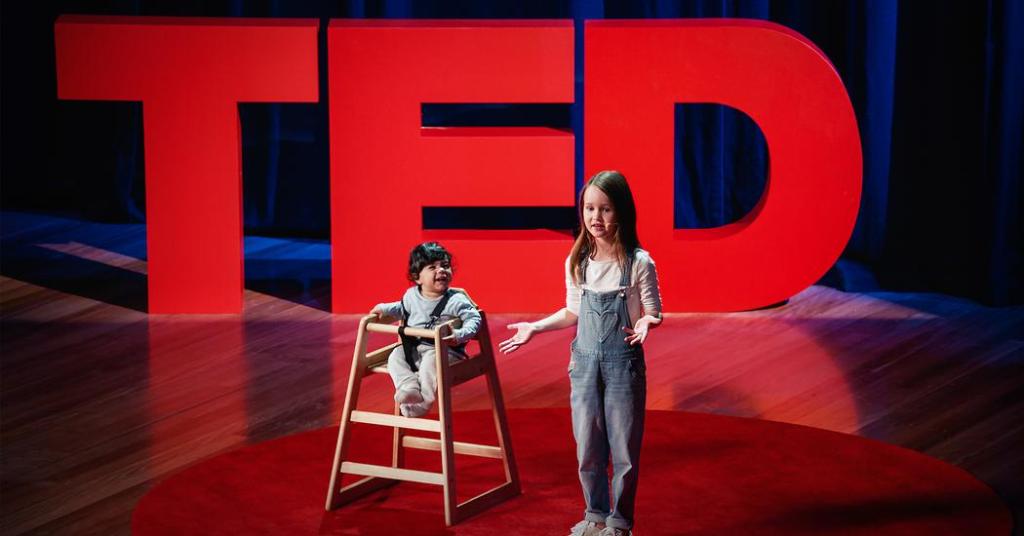
The most powerful TED talk I’ve watched, was given by a 7 year old…
Molly Wright makes her way across the TED stage and begins…
“What if I told you a game of peekaboo could change the world…?”
Molly Wright
Molly is not your typical 7 year old.
She is a prime example of what happens when a child’s brain development is nurtured through the early years.
Not only is she a prime example, she’s also an advocate for healthy childhood development.
I learned more from this 7 year old in 7 minutes, than I did reading over 100 books (written by adults) about children and their brains.
When kids are exposed to things like…
Connecting
Talking
Playing
A Healthy Home
A Sense of Community
… it contributes positively to their development.
Connecting with our family and community builds and strengthens relationships, encourages trust, promotes positive mental health, and teaches life skills.
I’m sure we can wait until kids are older to start teaching them these skills though, right?
WRONG!
So… When should we be connecting, playing and talking to our kids?
#1. First 5 Years!
Molly reminds us that these years of a child’s life are the most CRUCIAL years in their development.
Brains grow faster in the first 5 years than they do the rest of our lives. By the time kids are 7 years old, their brains have grown to 90% the size of an adults’ brain.
Do not underestimate those first 5 years…
So… What should we be doing those first 5 years?
#2. Serve and Return!
This is Molly’s scientific way of saying… CONNECT! TALK! PLAY!
Children’s mirror neurons are on alert! They learn through connecting and interacting with the adults they trust. Making eye contact and playing games with your child (yes, like peekaboo), are important for their development and for their learning!
So… How often should we be playing games like peekaboo?
#3. Early and Often!
Molly reinforces that we need to be playing these games and connecting with our child as often as we can, and as early as we can!!
Even a 1 year old is aware of the broken connection when our attention is diverted.
Diverted to technology… To our devices…
What would happen if we were distracted by our devices all the time?
When children are not receiving the positive interactions they need for healthy brain development, childhood becomes stressful – even traumatic.
It is harder for children to feel safe, to trust, and to regulate without connection…
Kids NEED positive relationships.
They need connection, to be spoken to, and played with.
They need a healthy and safe home.
To feel a part of a community.
And YOU have the opportunity to give them that.
So, thanks, Molly Wright (the smartest 7 year old I know), for reminding us that a game of peekaboo has the capacity to change the world…
Everyone!
Go do yourselves a favour and watch Molly speak right here!
Especially when it comes to our mental health, stress, and of course our intelligence.
But, we seem to be forgetting something about our friend, the brain…
He doesn’t work alone…
He is part of an essential team!
Introducing Team: Heart-Brain Connection!
Our heart and brain are in constant communication with one another.
They communicate in 4 different ways:
Neurologically
Biochemically
Biophysically
Energetically
The heart and brain need open communication to function optimally, just like any good relationship.
When they are communicating openly, it creates something called ‘Coherence’ in the body.
A Coherent state not only improves our mental wellness, but also improves our physical health and boosts our immune functioning!
So, HOW Do We Get To Coherence?
First, we need to understand who the real captain of this team is….
This Captain is…. drumroll please….
The HEART!
We need to, first, tap into the heart to effectively access the brain.
In order to synch up this wondrous team.
And then, to become coherent.
Okay, But, Why The Heart?
The heart has a mind of its own with 40,000 neurons!!
It has its own intelligence…. It can think for itself…
It doesn’t need its team member, the brain, to do all the thinking like we might assume. In fact… it does most of the thinking.
Afferent Neural Pathways
One way the Heart and Brain are connected are through these Afferent Neural Pathways.
These pathways lead up from the heart into the brain through ascending pathways, and down from the brain to the hearth through descending pathways.
When looking closely at these pathways, scientist have noticed that 90% of information travels UP from the heart to the brain.
We can see that the heart responds independently to the environment, processes emotions, and regulates its own rhythm without receiving any information from the brain!
Fascinating!!
Electromagnetic Waves
Another form of connection is through electromagnetic waves.
The brain and heart emit their own waves into the space around our bodies. These waves interact with other waves around us – including those waves from our fellow humans.
What scientists have found is that our hearts electromagnetic waves are 5000x bigger than that of our brain!
It is greater in amplitude and greater in strength.
In fact, our heart has the strongest rhythmic field produced by the human body!
And because of this, our brain syncs up and moves to the rhythm of our heart!
What a beautiful dance!!
This Heart and Brain Synchronization is Imperative for Coherence!
Coherence is a necessity.
It is the key to optimal health and well-being.
And our Heart-Brain connection is the key that unlocks coherence.
So please, don’t neglect your heart…
Remember we need to harness the power of both, the Heart AND Brain in order to care for our health through Coherence.
Are you aware of the thoughts that cross your mind on a daily basis?
We take our thinking for granted. We think useless thoughts. Thoughts that don’t benefit us. Or move us forward in life.
Instead, we allow thoughts in our minds that hold us back.
But, Our Thoughts Are More Powerful Than We Think!
Our thoughts have the power to manifest our reality…
“Great men are they who see that thought is stronger than any material force; That thoughts rule the world…”
– Ralph Waldo Emerson
And we have the power to wield our thoughts.
To use them for good. Or for bad.
Ours Brains Are Always Listening To Us.
Whatever we say. Whatever we think.
When we speak the same words and think the same thoughts, over and over again, our brain sends these signals that begin to form neural pathways.
The more often we think the same thoughts, the stronger these neural pathways become.
And the stronger these pathways are, the harder it is to deter from having these same thoughts.
Which is Why The Most Detrimental thought we can be telling ourselves is “I Can’t.”
“I can’t do this…”
“I can’t do that…”
“I can’t ever be happy..”
The more often we are telling ourselves these things, the stronger these neural pathways of “I can’t” become.
And our brains will automatically take us to the thought “I can’t” for everything.
We are putting limitations on ourselves and our capabilities.
You Create Your Own Reality
You can break the cycle. The cycle of negative thinking. The cycle of “I can’t”…
Just by being aware.
And putting in the work to reverse it.
Keeping in mind, that the longer you’ve been in the pattern of negative thinking, the stronger your neural pathways are… which means you’ll just have to be consistent!
All day long, you give away pieces of your self to others.
To the tiny humans who need your support. Your full-attention. And your love…
But do you ever take a fraction of a second to give back to yourself?
Like a Car.. You Just Can’t Run on Empty..
Listen, I’ve been there.
My students mean the world to me.. There is nothing that I wouldn’t do for them. As long as it means their protection. As long as they are loved.
But along the way, I forgot to stop and love myself…
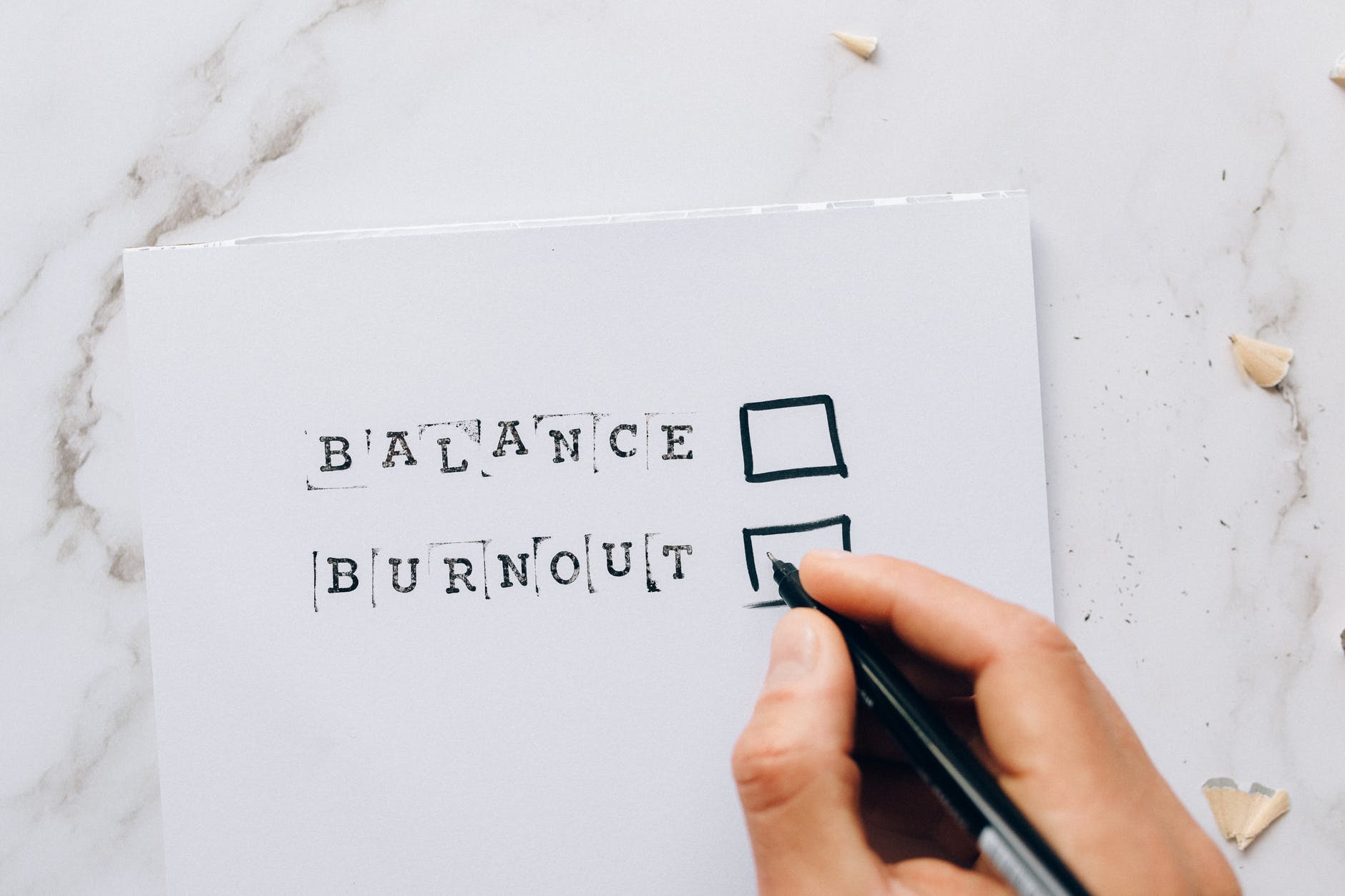
Even though, I was aware of it, I thought burnout just couldn’t happen to me if everything I did was out of love.
But that wasn’t the case.
I’m human. You’re human too.
And as humans, we need to be filling up our fuel tanks constantly so we can keep on giving to others.
Sometimes, that means we need to give ourselves morethan others.
For humble educators: it’s a hard pill to swallow…
But it’s true.
I’ve spent the last few years learning this lesson the hard way.
And if I could go back in time now and have a conversation with the younger version of Miss T, I would tell her this:
#1. Don’t Bottle Things Up:
It’s easy to stuff our feelings, our exhaustion… And carry on for the sake of our students. But don’t.
Talk to people. To other teachers. Find a community. There is power in knowing you are not alone.
#2. Practice Self-Care:
There are no rules for self-care – it looks different for everyone.
Do things that nourish your soul, recharge your battery and foster sanity. This could mean writing in a gratitude journal, taking a bubble bath, going for a walk… Whatever it is, schedule time for YOU… Everyday!
Begin your morning with something for you, instead of immediately rushing off to take on the world.
#3. Take A Break:
There is strength in knowing when to step back. When to ask for help.
We pride ourselves in never having to call in sick or book a sub. But that’s not sustainable… Take the time you need to recharge.
Book a mental health day each month. Or apply for a short leave if you are in need of some ‘you-time’. Make it a reoccurring thing – like you’d make time to see your mechanic regularity.
There is a Good Chance you Already Know These Things, I Did Too…
But please, don’t let yourself hit burnout, like I did, before actually making some changes in your life.
It’s time to put yourself first.
You are human, after all.
Even the tiny humans in your life need you to love yourself.
“I wish life was easier.. I wish I had a better job…. I wish I could be happy… I wish… I wish… I wish…”
Then you, my friend, are living in ‘The Gap.’
What is this Gap, you ask?
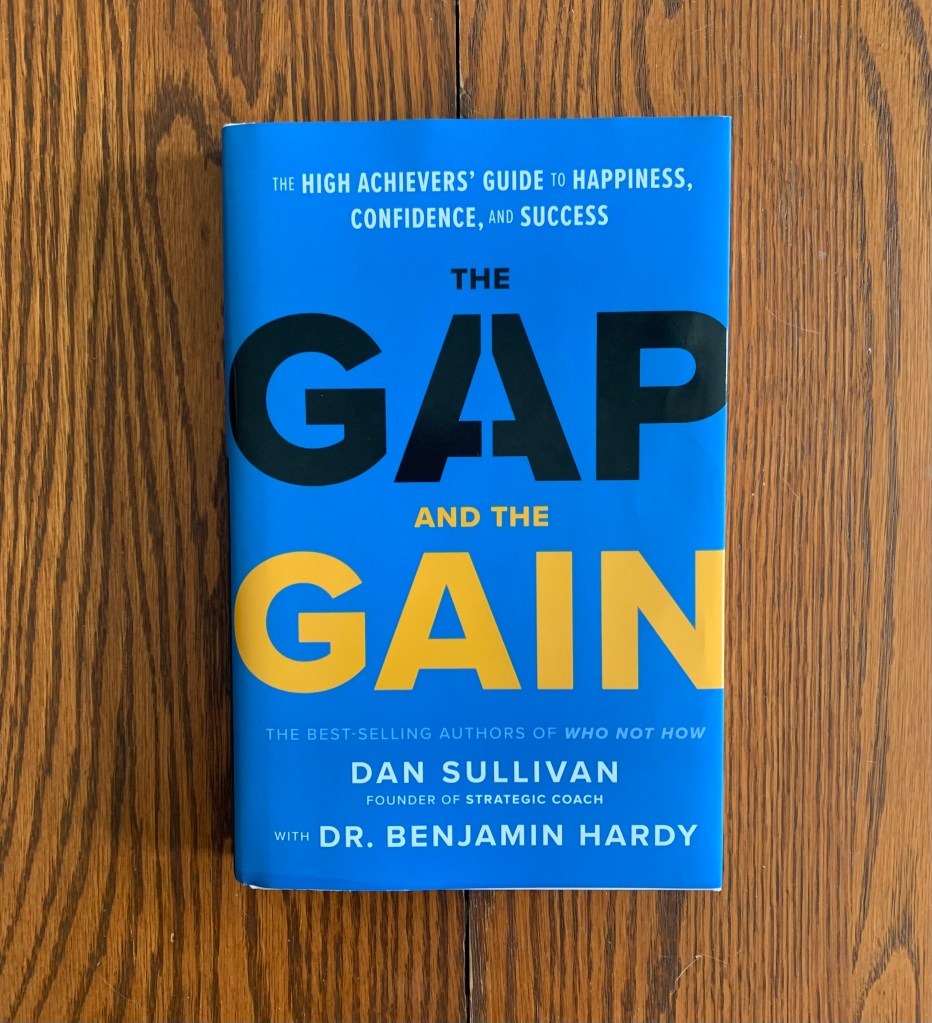
‘The Gap’, described by author Dan Sullivan, is this constant comparison we have of ourselves to our future, our goals, our ideals.
Unfortunately, when we are always comparing ourselves to where we want to be some day, we are spotlighting this gap.. of all we don’t have.
It’s too easy for us to get stuck in this cycle of thinking.
It’s easy because we are natural goal setters.
We work towards goals and strive for success.
And while setting goals is not a bad thing, if we are only measuring ourselves to our future goals, we will only see ‘the Gap.’
This can have detrimental effects on our happiness and well-being.
Here is what we need to do: Shift our mindset from ‘The Gap’ to ‘The Gain’
‘The Gain’ is the opposite of ‘The Gap’.
Instead of measuring forward, we measure backwards. We can look back in time and measure our current selves to our old selves.
We are able to see how far we’ve already come.
We aren’t measuring ourselves to something external. We are shifting inward.
Now, don’t get discouraged is you find yourself in ‘The Gap’ from time to time…
Awareness of this mindset is key!
Awareness means we have the ability to choose another thought. Another mindset.
Awareness of ‘The Gap’, allows us to shift into ‘The Gain’!
To remind ourselves of our progress. Of how far we’ve already come.
To appreciate the experiences we’ve had and lessons learnt from those experiences.
To start thinking:
“Look how far I’ve come… I am grateful for where I am on this journey… I’m grateful for all the lessons I’ve learned…. I’m grateful…. I’m grateful…. I’m grateful…”
Only by making this shift to see ‘The Gain’, can we be happy now.
Remember:
“Happiness is where you start, not where you finish…”
I just finished re-reading ‘The Power of Moments’ by Chip & Dan Heath. (If you know this book, awesome! If you don’t… get yourself a copy!… There’s a reason I read it a second time around! :P)
I first read this book 2 years ago. One day recently, I started thinking about it. How I wanted to read it again. And refresh my memory of its many lessons.
Two days after that thought, the book ended up on my boyfriend’s doorstep… randomly, through a book exchange he was a part of…
Talk about synchronistic!!
I took it as a sign to start reading it again. It was just as good the second time around!
‘The Power of Moments’ a wonderfully inspiring book about how we can capitalize on and craft moments that have the power to be life-changing. (More on HOW in another blog post… :P)
One of the biggest takeaways from this book was:
The Power we have to Create Moments Through Simple Connection.
It is so easy for us to get lost in our day-to-day mundane tasks. We go through the motions; Do our jobs and cross things off our daily list.
Students, clients, and fellow staff members become 2 dimensional characters to us. It’s easy to forget there’s more beyond the surface of the people we interact with daily.
I know for myself, after working with the same students each day, it’s easy to lose sight of the human being behind the student. Too easy to focus on the daily to-do’s. Especially when it feels like there’s a million of them…
But the truth is: Our students, our kids, our coworkers, are more than just a number, or a ‘to-do’ to cross off a list.
They have their own identity. And with their identity, comes a whole background of experiences and moments that shaped them into who they are.
It is important for us to acknowledge each individual identity. After all, we are all different in some way. We’ve had different experiences that all led us up to this one moment. HOW we got here matters just as much, if not more, than the fact that we are here.
Its our human nature to want to be seen and heard. To be noticed and acknowledged.
The authors of this book suggest a reframe to our thinking…
Instead of always asking “What is the matter with you?”,
we simply ask instead “What MATTERS to YOU?”
See how powerful that statement change is?
We get lost trying to assess and fix problems, we often forget to consider the individual as a whole.. Their feelings and their experiences.
I wanted my students to know that they were loved and heard. I wanted them to feel appreciated, down to their very core.
During a Wednesday afternoon in Mindfulness Club, I brought in different coloured sheets of paper, markers, and crayons. I explained we would be mindfully working on a little project called:
“What matters to me!”
I reminded all of my students that although we are all in the same place, we all have different stories and backgrounds. There are certain things and experiences that make us, us. And how important all of our individual stories are. How those stories deserved to be acknowledged.
And so, we all had the opportunity in Mindfulness Club, that day, to create our own “What Matters to Me” poster (myself included!) so that everyone around us could see our stories. So they could see what lies beneath.
A one-day-project, turned into a whole-month-project!
Because my kiddos had so much they wanted to share about themselves!
They shared about their families and their experiences. About certain memories that stood out in their minds. About the things they liked and the things they didn’t. Some were personal. Some were sad.
All were so very beautiful in their own ways.
I learned a lot of things that day. About my students… About our own stories…
About making sure those stories are heard and understood.
What I’ll remember the most about that day, is the way their eyes lit up just because someone listened…
I really do believe it is as simple as acknowledging those around us.
Seeing them… I mean, really seeing them.
We all deserve to be seen.
And the most wonderful part about that…
Is thatWE have the power to give others the acknowledgement they deserve…
Do you understand and feel what others are feeling?
All of my life, I have been able to quite literally, FEEL the feelings of others.
When someone is going through a rough time, or having a bad day, in my head, I can instantly see all of the things that happened to them that led up to this feeling… I can feel exactly what they are feeling. I understand them.
And that feeling of empathy is magnified when it comes to my students..
Working at my little Elementary School, I’d met a lot of kiddos with some sad stories… some very tough starts to life.
They expressed their sadness through anger and tears.
And I felt it… deeply… So much that it would physically hurt.
I often wondered why I had been given this curse of being an empath…
I feel too much. Every heart break, every traumatic experience…
But over time (and with the help of a fabulous read that I’ll share below!), I shifted my perspective…
I realize now that being an empath is not a curse, it’s a gift.
Almost like having a super power!
To be able to completely feel and understand where someone is coming from. As much as it has the capacity to hurt… It can also heal…
You can truly BE there for that human being- fully present for that human being…
And being there, in complete understanding, can mean the world to someone.
So, if you are an empath, like me. And you hurt and feel the pain of others on a daily basis, just know that you have a gift!
The world needs your empathetic super power! Now, more than ever.
Trust me, I know it hurts. I know how hard it can be…
BUT, can you imagine what the world would be like without people like you and me?
I envision a world of isolation.. Beings who go through the motions each day.. Being who lack understanding and compassion.
And that is not a world I want to live in.
Pain is hard, but I’ve learned that I’d rather feel pain if it means also feeling joy.
Especially if it means that I can make a difference to one little someone. Anyone who might need someone to understand…
So… calling all you empaths out there…
You have a gift! And the world needs that gift!
With love,
Miss T.
P.S. Embrace the hell out of your superpower!
5 Powerful Tips to Take Care of Your Empathic Self:
As an empath, it is necessary to recharge yourself on the daily. We can easily be drained of our energy from day to day just through our emotions and feelings.
Here are some simple things you can do to recharge your battery:
Start the day off doing something for YOU!
It’s common in society for people to wake up at the last possible moment before rushing off to work or school. We get right into our days doing something for someone else, but this doesn’t allow us any time for ourselves. And at the end of a tiring day, it’s even harder for us to expend more energy on ourselves. We get left out. But when you jump start the day by doing something for you, it changes everything! And that something could really be anything, anything that fuels your soul… What do you enjoy doing? Journaling? Reading? Meditating? Yoga or some exercise? Whatever it is, make sure it is something you LOVE to do. Otherwise getting up a tad bit earlier will feel like a chore. Make it so you are EXCITED to get out of bed in the morning!
Get some good sleep (and probably a little more than you are currently getting)
This one is a given. Sleep is necessary for us to feel recharged. When we sleep, our brain and bodily systems have a chance to rest and restore themselves. The problem is, we don’t often give ourselves as much sleep as we need. Sleep looks different for everyone, so I’m not about to prescribe a ‘one-size-fits-all’ amount. But ideally, you want a consistent sleeping pattern and a nice deep sleep. Hitting REM (Rapid Eye Movement) sleep is so beneficial for our health! This is when we do most of our dreaming. REM sleep positively affects our moods, memory and brain development. Treating yourself to some deep REM sleep is a wonderful way to replenish your empathic self!
Unplug from Technology or go on a Tech Fast.
This one partially goes hand in hand with #2… Unplugging from all technology (yes, I’m talking about ALL screens- your phone, your tablet, even your tv!) 2 hours before bed will help you get to sleep quicker and have a deeper sleep. Also, there is value in going on a technology (or social media) detox. Being dependent on our technology can cause enough stress on its own- constantly feeling the NEED to respond right away, or comparing ourselves to instagram models… Taking some time apart from technology is freeing! Try a day or 2, or a week – you decide what you’re comfortable with. Don’t let it become stressful though or you’d be missing the point. Even setting some better limits on the amounts and time you use technology. Like: not using your phone first thing after you wake up, or limiting the amount of time you spend on social media on your phone. Unplugging from our technology every once in a while – however you choose to do it – is a gift.
Know your limits… and HONOUR them!
As an empath, sometimes saying no can be a hard thing to do. When your boss asks you to stay at work and earn some overtime, or a friend asks you to attend an event.. We empathize with them and easily cave in. Even if we are already running on empty… Awareness of this pattern is important because once you can spot it, you can start to say ‘no’ when you are feeling depleted. It’ll take some time building the ‘no’ muscle though, so don’t be too hard on yourself if at first you don’t succeed! To ease into it, don’t say ‘no’ right off the bat. Try saying things like “I’m not too sure, can I check my calendar at home and get back to you later?” Then, when you’ve had more time to process the priority of what you are being asked to do, you can get back to them with a confident “I’m sorry, but I won’t be able to make it this time! I have a prior commitment.” Being aware of your limitations and saying ‘no’ are crucial for all human beings! It’s impossible to pour from an empty cup.
Read books on Empaths! Especially THIS book: The Empath Experience: What to do When you Feel Everything by Sydney Campos
This book played a huge role in shifting my perspective from the empathic curse to the empathic gift. A friend of mine at work recommended it to me (I’m all about book recommendations so if you have any, send em’ my way!) and I am forever grateful to her for it. It definitely changed the way I viewed myself as an Empath. It allowed me to see my strengths instead of my weaknesses. I’ve been better able to deal with tough situations and tragedies because of it. Not that it means I don’t get affected by sadness anymore, but my awareness allows me to shift my thinking to seeing the opportunity… the opportunity I have to help.. And to make a difference. And that’s all most of us ever want to do… is make a difference…
This powerful book allowed me to reframe my thinking of myself as an Empath… Grateful to have happened upon it..
Remember: Self-care is not selfish, it is essential!
“Your work is to discover your world and then with all your heart give yourself to it.”
Happy Monday to all you Mindful Minds.. Miss T, here!
You may have seen my post last week, where we jammed a bit about mindfulness and why I’m a big advocate of it. Especially when it comes to practicing it with our kiddos.
Well, today, I’d like to get a bit into the ‘behind-the-scenes’ of mindfulness and explain how it works and what it can do for our body and mind.
mindfulness, in essence, is our natural state of being; it is living in and embracing the present moment.
It releases us from all those swirling thoughts in our heads, and brings our focus into the now.
Don’t get me wrong, I know it is an extremely simple concept but it can seem complicated and hold more weight than it seems!
There are even a ton of benefits from incorporating mindfulness practices into your life. Some, you may haven’t even realized.
Yes, Mindfulness is bringing awareness to what is going on around you. And of course, focusing on the world around you brings you out of your own head and reduces anxious and fearful thoughts.
But what else does mindfulness do?
I want to introduce a new term to you (maybe you’ve heard this one before… it’s quite the mouthful!).. It may help you understand the power that lies behind mindfulness.
Psychoneuroimmunology:
The study of the effect of the mind on health and resistance to disease
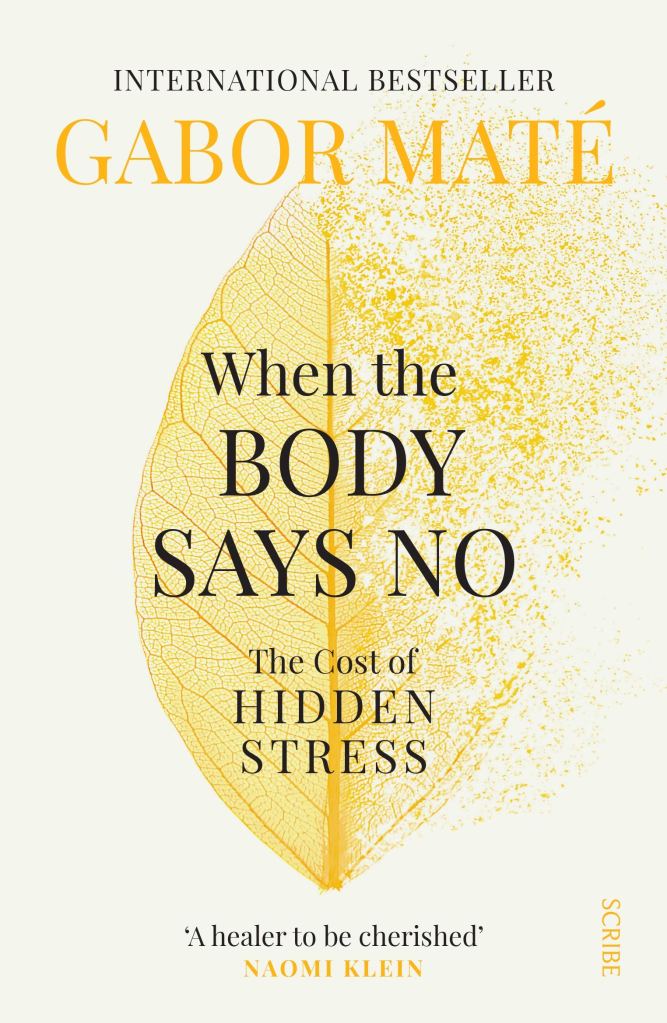
I heard about this term about 3 years ago in a book I read by Dr. Gabor Mate. If you don’t know who he is, Dr. Gabor Mate is a physician and internationally renowned speaker who specializes in addiction, childhood development, and the relationship of stress and illness to the body. His book, that I read, is titled: When the Body Says No – The Cost of Hidden Stress.
This term stood out in my mind. I mean, just look at the word! It took me a couple of tries to make sure I was getting the pronunciation just right.. But mostly, it gave a name to something that I had understood, but couldn’t quite explain.
Even though I had never heard the term psychoneuroimmunology before, now that I understood it, I realized I had already read a lot about it…
I love learning about the inner workings of us humans and our biology. In the past, I’d studied the placebo and nocebo effect a lot. As well as epigenetics (the study of how our behaviours and environment influence our gene expressions). Realizing, all of those were perfect examples of psychoneuroimmunology- where mindset and thoughts dictate reality.
I read many books with stories of instances where a patient’s mindset can have a direct impact on their healing process. And their likelihood to get ill again. Even instances where a particular mindset was the reason for illness in the first place.
Even within my classroom walls, I realized teaching my students to have a growth mindset was psychoneuroimmunology hard at work! Aiding kids to think in a positive mindset makes them more likely to reach their goals, AND creates happier and healthier kids!
I’d seen it all around me and learned all about it in my reading endeavors, but never really knew it had a name… until now! After naming it, I began to see patterns of psychoneuroimmunology all around me!
In my classroom, in the books I read, and even within my own family.
My sister is someone who has suffered from depression and chronic migraines almost all of her life. She has them quite regularly and was even put on a prescription medication to help her ease the pain of her migraines. It helped for a short while, but overtime, her body adjusted to the medication and she wasn’t getting results.
I started to pay more attention to her migraines. When she got them, and how often. I started to notice an interesting pattern… Her migraines always subsided when she had good days. And they flared up when she had bad days- bouts of depression or when something was causing her extra anxiety, or even when getting into arguments with someone she cared about.
It became very clear to me that her migraines were in direct correlation with her thoughts and overall mental health.
After studying psychoneuroimmunology and conducting some of my own experiments, I am even more confident that with the practice of mindfulness, we can positively influence our mental wellbeing and, in turn, achieve optimal health!
Mindfulness allows us to strengthen our mind by disassociating from our thoughts. It reminds us that, although we are full of thoughts, it doesn’t mean we ARE those thoughts. We simply have them and we can, just as simply, CHOOSE another thought. Mindfulness is about the power of choice. It brings about awareness- about ourselves, our lives and the people around us.
I see Mindfulness as exercise for the mind. Just as we would train our muscles by going to the gym, we can train our mental toughness through mindfulness.
And once again, we can benefit in so many ways from Mindfulness!
By using mindfulness to increase our mental resilience, it initiates a domino effect that translates to an abundance of other health and life improvements!
Improvements like:
Reduced anxiety and depression
Improved immune system functioning (and other bodily systems!)
Boosts confidence, self-esteem and self-awareness
Better memory and cognitive abilities
Better physical health- increases strength and flexibility
Stronger and more positive relationships
Builds resilience – overcome adversity
Enhances mind/body connection
Increases focus and attention
Maybe you’re thinking.. Really? I can gain all of that just from the practice of Mindfulness?!
The answer is YES!
I believe that mindfulness is the key to health and wellness!
And just like the study of psychoneuroimmunology reminds us: Our thoughts and psychological processes have an impact on our overall health.
But don’t forget, mindfulness is not a ‘one and done’ activity. Mindfulness is for life. It is about practice and getting those reps of mastery in. Building a solid foundation of mindfulness to live a mindful life.
It includes building a daily practice that fits into your life, that fits your schedule.
Start off slowly, and eventually, you’ll be practicing mindfulness throughout your day, without even thinking about it!
Before you know it, you’ll be a mindfulness ninja!
Well… I can’t give you one simple answer. Because the practice of mindfulness is simple and complex all at once – we’ll save the complex stuff for another post!
Mindfulness is our natural state of being…
…before the world was filled with constant distractions and everyday stressors.
When we focus on the present moment and are mindful in everything we do, it’s like we are connecting back to our roots. Our natural state of being.
Back in the times of our ancestors, our ‘fight/flight/freeze’ mode of our Autonomic Nervous System (ANS) was only activated when we were in serious danger. Dangers like being hunted or killed by larger animals.
And even then, when our ‘fight/flight/freeze’ (called our sympathetic nervous system) was triggered, we were still PRESENT. Presently focusing on removing ourselves from danger.Once the danger was removed, we were easily able to switch modes back into our parasympathetic nervous system, where our bodies and minds could ‘rest and relax.’
Nowadays, these stress triggers are everywhere. We stress all day long. About our kids, students or families. About our jobs or the pay we get. We stress over not making it to work on time while sitting in rush hour traffic. Or about how we will do on an exam.
And now with COVID we have additional stressors! We stress about sickness and the health of our friends and family. We stress about when the next shut down might happen. Or if we’ll end up losing our jobs. Or worse.. Our lives or the lives of someone we love.
Sometimes, we’ll even stress about all the bad things that could possibly happen and things that haven’t even come true yet (and most likely, won’t ever come true).
In this day and age, stressors are EVERYWHERE.
But there are 2 crucial differences about these stressors than what we’ve experienced in the past:
#1
Our sympathetic nervous system is basically running on overdrive! When we are regularly stressed, our body is living in this constant state of fight, flight or freeze. There is no time for our parasympathetic system to kick in (our rest & relax mode) and so our body is unable to conserve the energy it needs to function properly. Our body systems are working hard to get us out of this perceived danger, which never really seems to go away… This can have serious detrimental effects for us in the long term.
#2
The majority of these new stress triggers aren’t even happening in the present moment! They are things that are going on in our heads!! Like I said earlier, we give too much attention to the things that have not yet happened, and may not even happen. Yes, some of the things we think about are important to consider in terms of planning our lives, however, when we are non-stop thinking about our stress, it completely takes us out of the present moment. We are stuck living within our heads. Not mindful at all. And not our natural state of being.
Now, the wonderful thing about understanding all of this is that it makes us aware. Aware of the problem, so we can also be aware of the solution.
And in returning back to our natural state of being- Living and breathing mindfulness, we can reverse some of the long term effects that stress and anxiety can have on our minds and our bodies. We can extend our lives and improve our health!
Of course, it’s never too late to practice mindfulness!
But, I am an avid promoter of the “get ‘em started young” philosophy!
Why, you might ask?
Well, for one, kids are SPONGES! They are the best kind of learners because they hold onto new information quite easily. Especially if that information is engaging! And even more so, if they see the adults in their lives MODEL it well!
And second, even though it’s never too late for anyone to practice mindfulness and improve their health, when we teach mindfulness to kids, we are better able to set them up for a successful path in life. We can teach them strategies BEFORE stressful events happen and they will better know how to deal with them when the time comes.
Ever heard of the mastery rule of 10,000 hours?
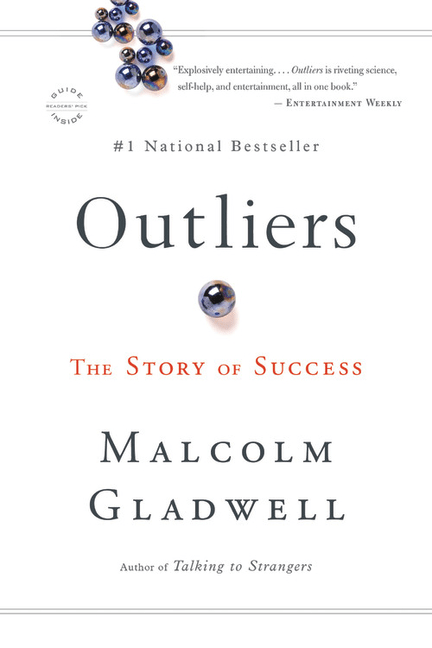
Well, Michael Gladwell speaks about it in his book “Outliers.” He states that it takes 10,000 hours of intensive practice to achieve a level of mastery in a particular skill.
In the case of mindfulness, bringing awareness and teaching this skill to kids at a younger age, allows them to achieve this level of mastery even before they become adults.
This is why I am so ‘gung-ho’ about practicing mindfulness to kids. By practicing mindfulness throughout their younger years, living in the present moment becomes a natural part of their subconscious. They develop mastery level to this skill before their teen and adult years – some of the most stressful years of their lives.
Being a master at mindfulness before they get into those stressful years, will allow them to utilize strategies for dealing with stress in the future.
We are setting them up for success in a terribly stressful world.
Imagine a world where we can all get out of our own heads and into the present moment?
A world where we don’t have to be constantly living in fight, flight or freeze.
I believe THAT world begins with our kids.
Stay tuned for more posts on how mindfulness works and how it improves, not only our thoughts, but our overall health!


























 Mindful Miss T.